A Small-City Fire Department at the Edge of Emergency Medicine
The call comes in and the clock starts. For patients suffering the most catastrophic cardiac events — the ones where a heart simply cannot sustain life on its own, even with CPR — every second between collapse and advanced intervention narrows the window of survival. In most North Texas communities, the tools available to a first responder on that scene have remained largely the same for years.
That changed in Melissa.
The Melissa Fire Department has partnered with PHI Air Medical and Medical City Plano to participate in an ECMO response protocol, a distinction that makes the city the first in all of North Texas to take part in this type of agreement. It is a milestone that, on the surface, reads as a line in a press release. Spend a moment with what it actually means, though, and the significance lands differently.
What ECMO Is, and Why It Matters Here
ECMO stands for Extracorporeal Membrane Oxygenation. The technology works by routing a patient’s blood outside the body through a machine that adds oxygen and removes carbon dioxide, then returns the blood to circulation — effectively doing the work of both the heart and the lungs when those organs have failed. It is a last-resort intervention reserved for the most severe cardiac emergencies, deployed when traditional CPR has not been enough to sustain the patient.
For years, ECMO has been a hospital-bound technology. The machinery, the expertise, and the clinical coordination required made it something a patient could only access after surviving long enough to reach a major medical center. The protocol that Melissa’s fire crews have now trained for changes that equation by weaving pre-hospital responders into the chain of care earlier, coordinating with air medical transport and a regional hospital partner to compress the time between crisis and advanced intervention.
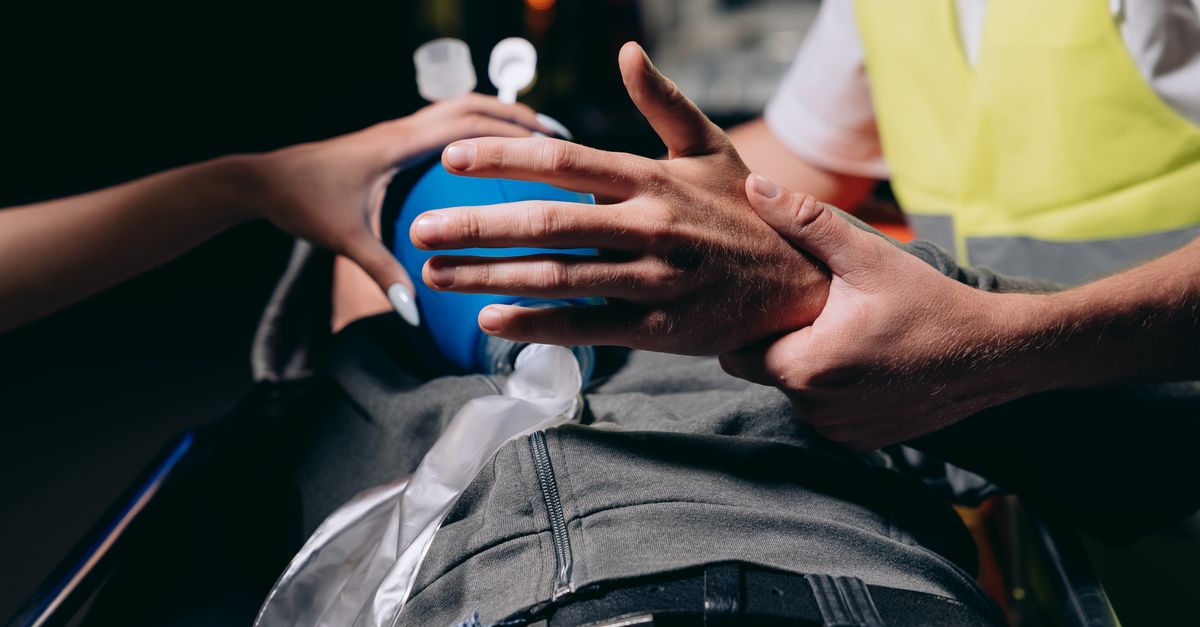
To mark the rollout of the protocol, crews participated in a full-scale training simulation — the kind of rehearsal designed to expose every gap, every communication lag, every procedural ambiguity before a real patient’s life depends on the answer.
Why Melissa, and Why Now
The question worth asking is how a city of Melissa’s size finds itself at the leading edge of a regional medical milestone. The answer has something to do with the nature of the city itself.
Melissa has spent the last several years in a period of rapid growth, the kind that tends to stress public services before it funds them. Roads, schools, and parks have all had to scale alongside a population that keeps arriving. The fire department has had to grow alongside everything else, and in doing so, it has had to make deliberate choices about what kind of department it wants to be.
Partnering with PHI Air Medical — a company that specializes in air medical transport across a wide regional footprint — and with Medical City Plano, a major hospital system, reflects a specific kind of institutional ambition. Rather than waiting for Melissa to reach some population threshold that might justify advanced protocols, the department pursued the partnership now, during the window when establishing these systems and training relationships is still manageable.
The partnership also reflects how emergency medical geography works in a fast-growing exurban corridor. Melissa sits far enough from major urban hospital clusters that transport times matter enormously in cardiac emergencies. A protocol that allows first responders to initiate a more sophisticated chain of care at the scene — coordinated with air medical and a destination hospital from the first moments — is not an abstraction for a community at this distance from downtown Dallas. It is a practical answer to a practical problem.
The Training That Precedes the Call
The full-scale simulation that Melissa’s crews completed is worth dwelling on, because it represents something that rarely gets attention in the public conversation about emergency services. The training itself is the work.
A simulation of this kind is designed to be uncomfortable. It surfaces the moments where a protocol sounds clean on paper but breaks down under pressure — where a crew member reaches for a piece of equipment that is in the wrong pocket, where a communication handoff between ground and air personnel introduces a dangerous delay, where the assumptions of one part of the system do not match the assumptions of another. The purpose is to find those friction points before they have consequences.
For Melissa’s firefighters, running through that simulation alongside PHI Air Medical crews and in coordination with Medical City Plano’s clinical teams means they are not learning a new protocol in isolation. They are building the specific, rehearsed relationships that make high-stakes coordination possible under pressure. That kind of institutional muscle memory is not built in a classroom. It is built by doing the hard thing in a controlled environment until the hard thing feels practiced.
What It Signals for the Community
Residents who do not work in emergency medicine might reasonably wonder what this protocol means for them in practical terms. The honest answer is that most people will never need it. ECMO intervention is reserved for the most extreme cardiac events, and the hope is always that it remains an edge case.
But the presence of a protocol like this — the fact that Melissa’s fire department has positioned itself inside a regional network sophisticated enough to deploy it — says something about the baseline of care the city is building for its residents. It means that a Melissa household in the middle of a cardiac catastrophe has a better-coordinated response available to them than would have existed without this agreement.
It also sets a precedent. Being the first city in North Texas to participate in this type of ECMO response protocol means other departments in the region will be watching. The training simulation, the partnership structure, the coordination model with air medical and hospital systems — all of that now exists as a template that neighboring communities may eventually adopt. Melissa’s fire department, in a sense, has done some of the hardest early work on behalf of a region.
For a city that often defines itself through its schools, its parks, and the texture of its community events, this is a reminder that the quieter institutions — the ones staffed by people who show up before most residents are awake — are also shaping what kind of place Melissa is becoming.
A First Worth Noting
First-in-North-Texas designations are not rare enough to be dismissed and not common enough to be taken for granted. When a small city earns one in a domain as consequential as cardiac emergency response, it deserves more than a line in a civic newsletter.
The Melissa Fire Department, PHI Air Medical, and Medical City Plano have built something together that did not exist in this region before. The full-scale training simulation is complete. The protocol is in place. The next step belongs to the calendar — and to whatever call comes next.